

₹8L to ₹41L in 3 Months
When a brand is already doing ₹8L a month, it's tempting to think the hard part is over. It isn't. Scaling from ₹8L to ₹40L is harder than scaling from ₹0 to ₹8L, because the mistakes are more expensive and the problems are less obvious. This brand came to us with a plateau they couldn't break through, an ad account they had been running themselves, and a strong belief that the issue was their budget. It wasn't.
Where the Brand Was When We Took Over
Women's fashion brand. Strong product line: co-ord sets, kurtis, casual western wear, fusion styles. Priced between ₹799 and ₹2,499. The brand had been running Meta ads for 7 months before we came in. They had built the account themselves, following YouTube tutorials and trial and error.
Revenue had been stuck between ₹7Land ₹9L for four consecutive months. They tried increasing the budget. ROAS dropped. They pulled it back. Revenue dropped. Same cycle, every month.
When we got access to the account, the first thing we noticed was the creative. One hero ad had been running for19 weeks. The frequency was 6.2. That means the average person in their targetaudience had seen the same ad six times. That's not marketing. That's noise.
The Full Diagnosis
We spent 3 days auditing the account before touching anything. Here is what we found:
- 3 active campaigns, all using the same creative, targeting overlapping audiences they were competing against themselves in the auction
- No retargeting campaigns at all they were spending 100% of their budget on cold audiences and not recapturing warm traffic
- Ad frequency averaging 6.2 on the main campaign severe audience fatigue
- No creative testing structure they had run one video for 19 weeks and hoped it kept working
- Website had no urgency triggers, no size guide on product pages, and checkout was 4 steps too long for mobile buyers
The budget wasn't the issue. The account structure, the creative, and the website conversion rate were all broken at the same time.
You can't scale a tired creative with more budget. That's not scaling. That's just burning money faster.
What We Fixed First
Week 1 was entirely about stopping the bleeding before growing. We paused the 19-week-old creative. Were structured the 3 overlapping campaigns into a clean 3-tier funnel with excluded audiences at each stage so there was zero overlap. We added a retargeting campaign targeting the last 14 days of product page viewers. And we flagged the website issues to the founder, who fixed the checkout flow over the same weekend.
These changes alone improved ROAS from 2.3 to 3.1 within 5 days, without a single new creative. Just structural fixes.
Building the Creative Engine
The brand had good product photography. We used it. But we shot it differently with lifestyle context, not just product shots. We used the brand's existing content team and gave them a new brief: every creative needed a clear hook in the first 2 seconds and a clear reason to buy in the caption.
In month 1 we tested 18 new creatives across 4 formats:
- Look book carousels: 5-7 images showing complete outfit looks styled around each piece
- Single product videos: 15-30 second videos showing the product being worn and moved in
- Collection reels: fast-cut videos showing 6-8 pieces from a single collection
- Offer-led static ads: clean product image with discount or offer prominently displayed
The look book carousels consistently outperformed on ROAS. The offer-led statics drove volume at lower AOV. We scaled both for different objectives.
Audience Strategy
With 7 months of pixel history and thousands of past purchasers in the account, we had solid data to build from. We created 3 lookalike audiences based on purchasers and ran them in parallel against interest-based targeting. We let Meta optimize between them.
We also introduced a separate campaign for lapsed buyers people who had purchased more than 60 days ago. The brand had 2,200 past customers who hadn't bought again. We ran a win-back campaign with new collection creative. That campaign had a 6.8x ROAS because these people already trusted the brand.
Month by Month
- Month 1: ₹17L revenue. Ad spend ₹3.4L. ROAS 5.0x.Learning what works.
- Month 2: ₹28L revenue. Ad spend ₹5.6L. ROAS 5.0x.Scaling what won.
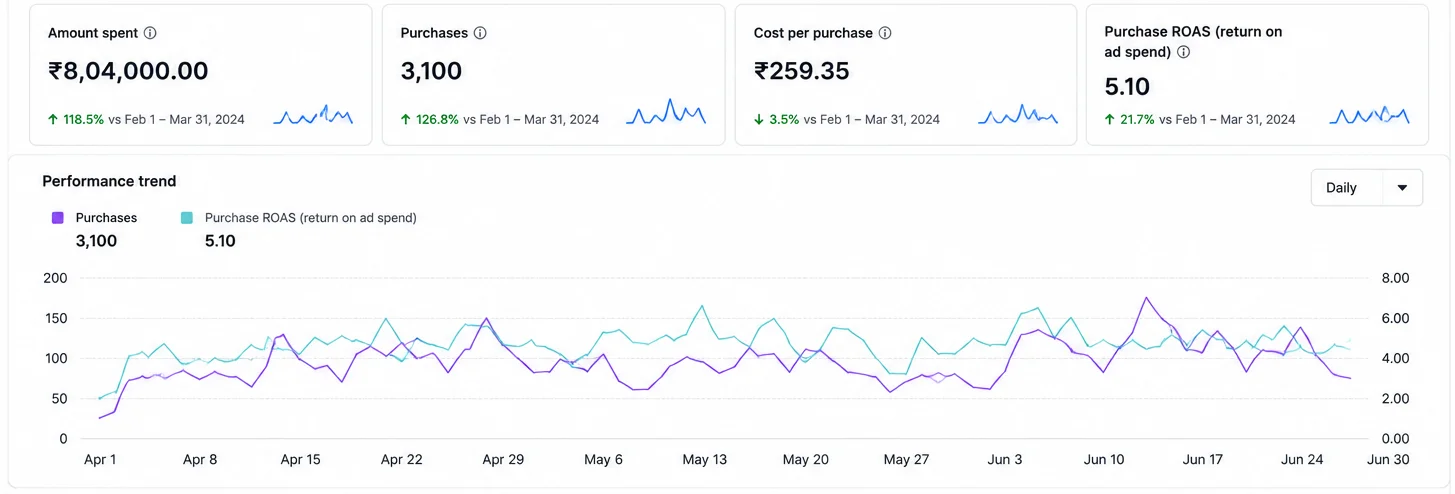
- Month 3: ₹41.2L revenue. Ad spend ₹8.04L. ROAS 5.1x.Full scaling mode.
ROAS consistently was above 5xacross all three months because we kept the creative fresh. Every 2 weeks, new creatives went in. Underperformers were cut. Winners were scaled.
The Final Numbers
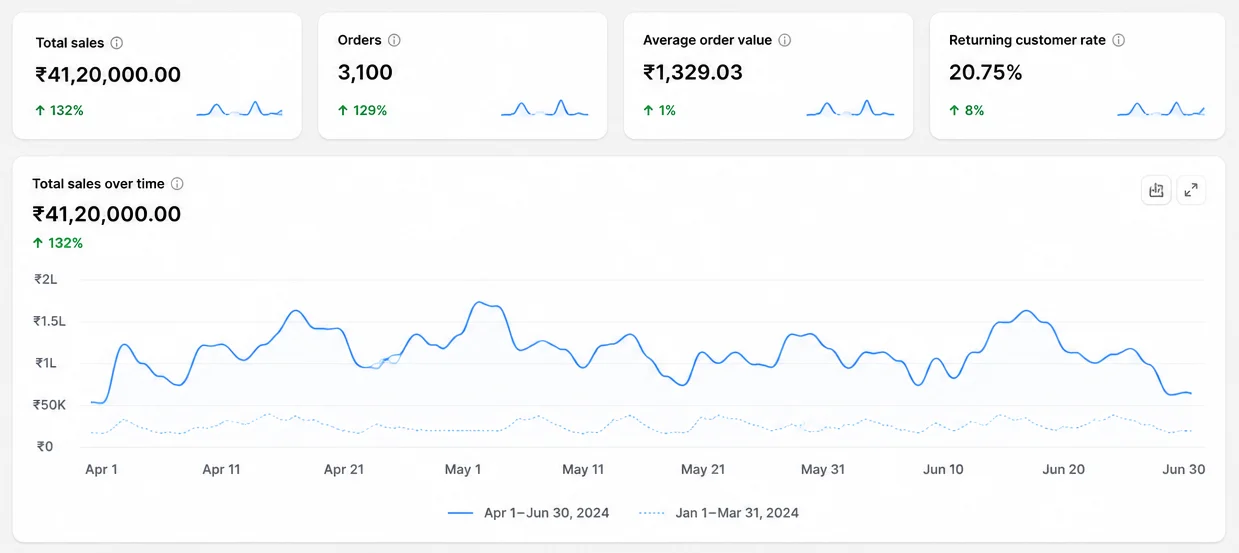
In 3 months, monthly revenue went from ₹8L to ₹41.2L. A 5.1x increase. ROAS of 5.1x on ₹8.04L ad spend in month3. CPP at ₹259. The brand crossed ₹1Cr in total revenue across the 3-monthperiod.
The plateau they had been stuck at for 4 months broke in week 1. Not because we spent more. Because we spent smarter.